Accurate timing at every event, with nothing to set up beforehand.
Start, splits and finish are virtual lines on a satellite map. One device on each car times every crossing to the millisecond and logs centimetre-level data for the driver, using corrections from one base station at the venue. No beams, loops or reruns.
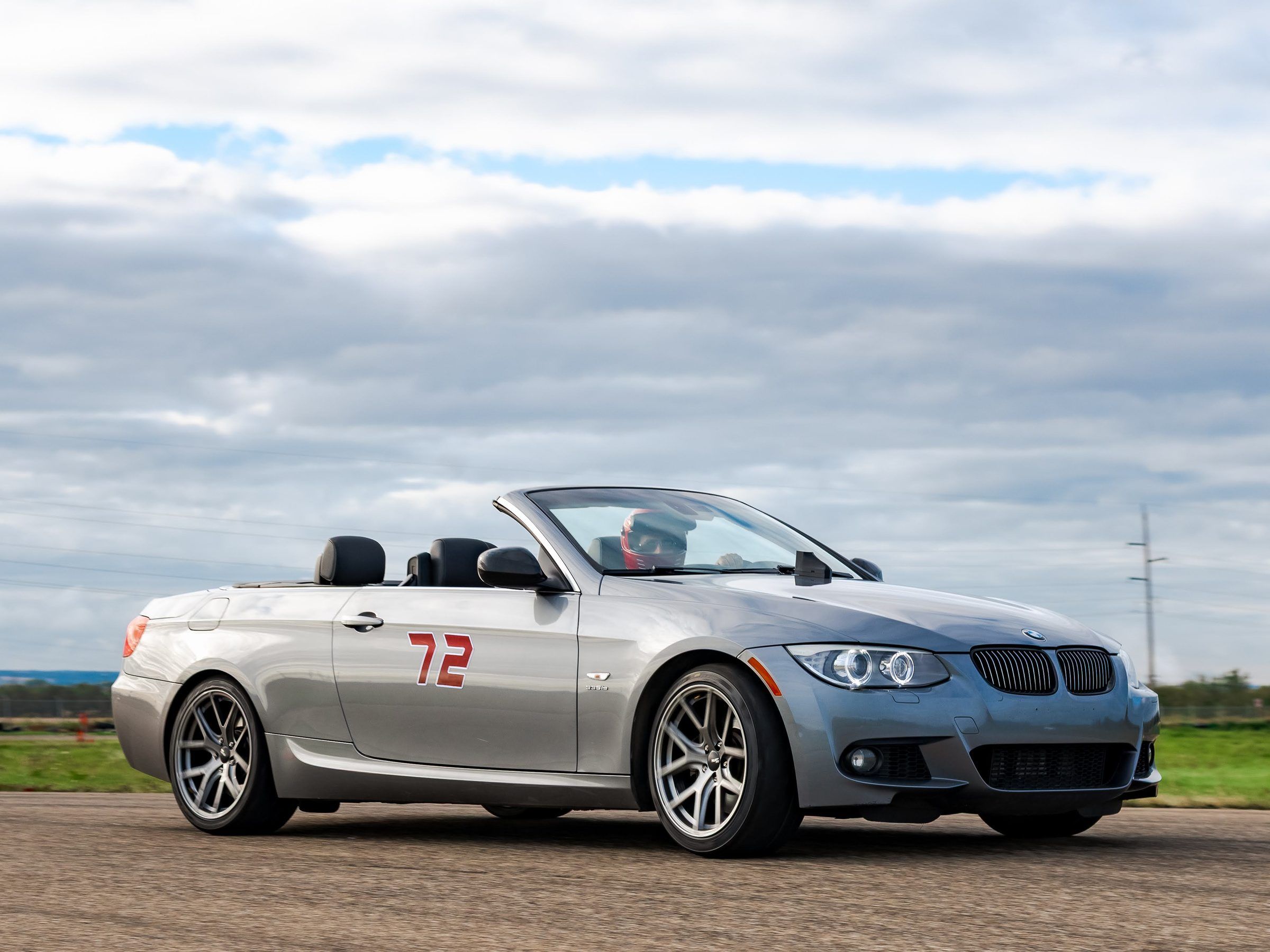
Anchored by DMS Time Trials.
DMS Time Trials runs StratoCross autocross and StratoSprint track sprints at Stratotech Raceway, and is deploying Sidereal for its 2027 championship season.

Special 2027 pilot pricing: $25 CAD Point to Point / $35 CAD Circuit Lapping, per car per event
We are onboarding a limited number of additional series into the 2027 Beta Pilot. Participating series get dedicated support and full hardware fleets.
Timing shouldn't be the hardest part of the weekend.
Organizers and track operators choose between optical beams and in-ground loops. Some systems also use wireless, with short range and still less flexibility. All of them are hard to set up and run.
Physical beam setups
- Tripods blown over by wind or clipped by cars
- Long cable runs across hot paddock lanes
- Morning alignment delays and sensor drift
- Missed triggers in sunlight
- False trips that force reruns
In-ground track loops
- Requires cutting slots into track asphalt
- Permanent installation impossible on leased or temporary venues
- Zero flexibility between configurations
- Intermediate splits cost thousands per line
No beams to align, no loops to cut
- Virtual lines drawn in software that cannot move
- Extra splits cost nothing
- Millisecond timing certainty with simple trackside gear
- The full seasonal fleet arrives in master charging cases, and we maintain it
- Every device is also a data logger, streaming 10 Hz centimetre-level data to the driver
- Easy setup: put the device on the car and race
Five steps, and you're off to the races
Draw the course once
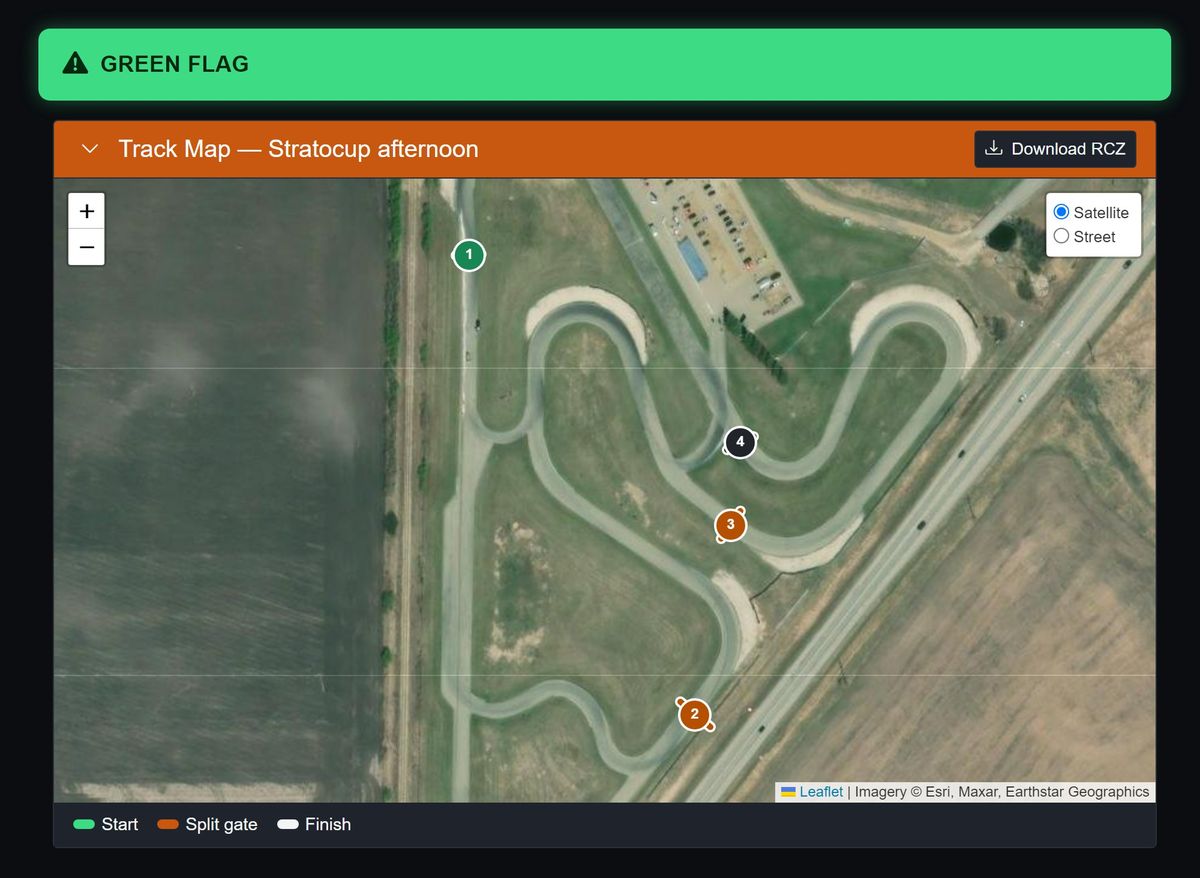
Set the start, finish and splits on a satellite map. The lines never drift between events, and they can be shared to each driver's RaceChrono.
Deploy the base station
Turn on one base station under open sky. It surveys its own position and broadcasts the live corrections that give every device centimetre-level accuracy.
Hand out the devices
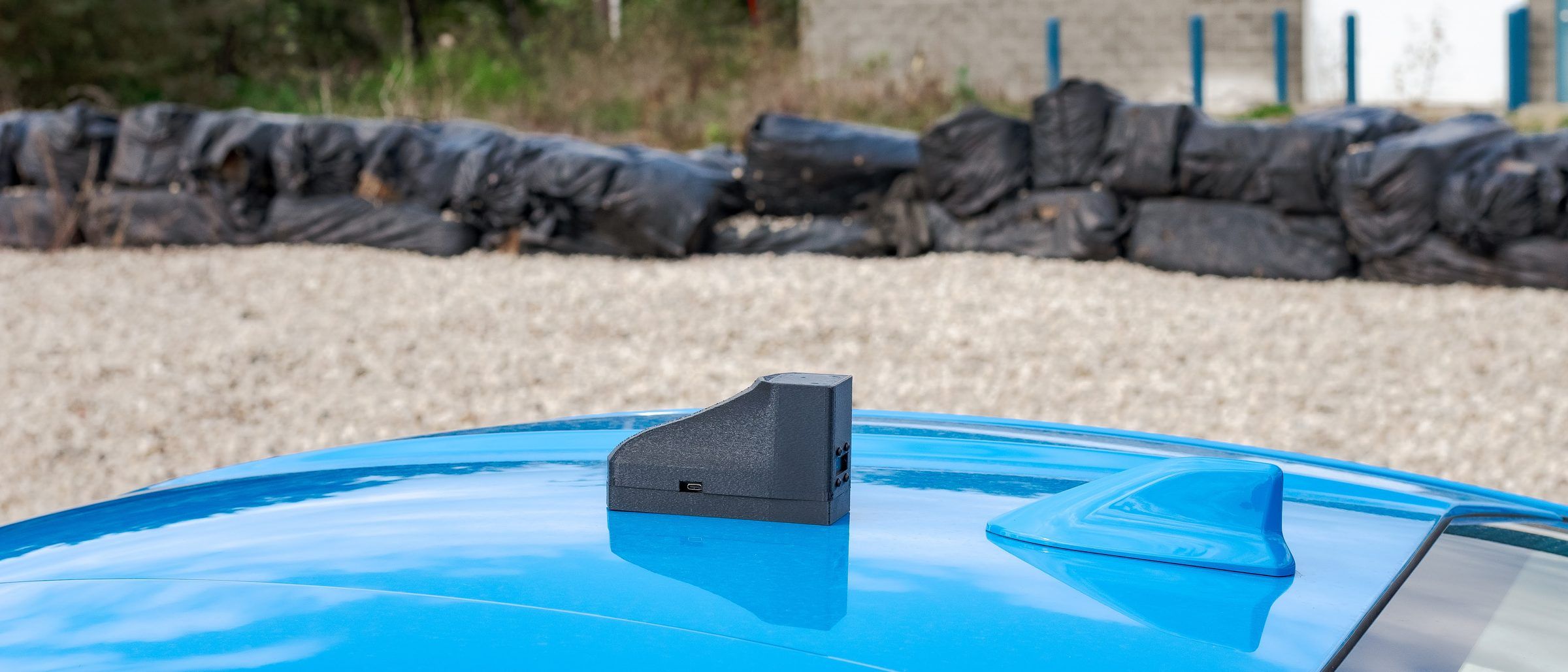
Mount each device on the hood, roof or trunk with strong cup magnets or lever suction cups, or clamp it to a roll cage pipe. On grid, tap a phone to the device to assign the driver. Or pre-assign drivers in race control, and the driver grabs the device with their name on the display.
Run the event
Devices work out each line crossing to the millisecond and send the times live over cellular.
Marshal from the field
Corner workers record cone penalties and track flags from their phones, with no login needed. Or one person can enter them from a phone or computer.
No venue Wi-Fi, no lost runs.
Cars identify themselves at grid, results sync over cellular, and marshals report from their own phones.
Automatic car identification
Pair the device with an NFC phone tap or pre-assign drivers in race control. The system knows which car crosses the line without an entry on a computer.
2-in-1 transponder and logger
Mounts with strong cup magnets, lever suction cups or roll cage pipe clamps. Scores the race while streaming 10 Hz, centimetre-level Bluetooth telemetry to driver phones.
Cellular LTE with a global SIM
Every device carries an onboard cellular LTE modem and a global SIM with data included. No venue Wi-Fi or router to set up.
Onboard storage
Crossings save locally if cellular drops and sync automatically upon reconnection. No lost runs.
Optional no-login field reporting
Corner marshals report cone hits and track status directly from their phone browser, with no accounts.
Software splits
Place start, finish, and intermediate splits on satellite maps. Redesign your course in seconds. See live car positions on the map.
Everyone sees the same thing.
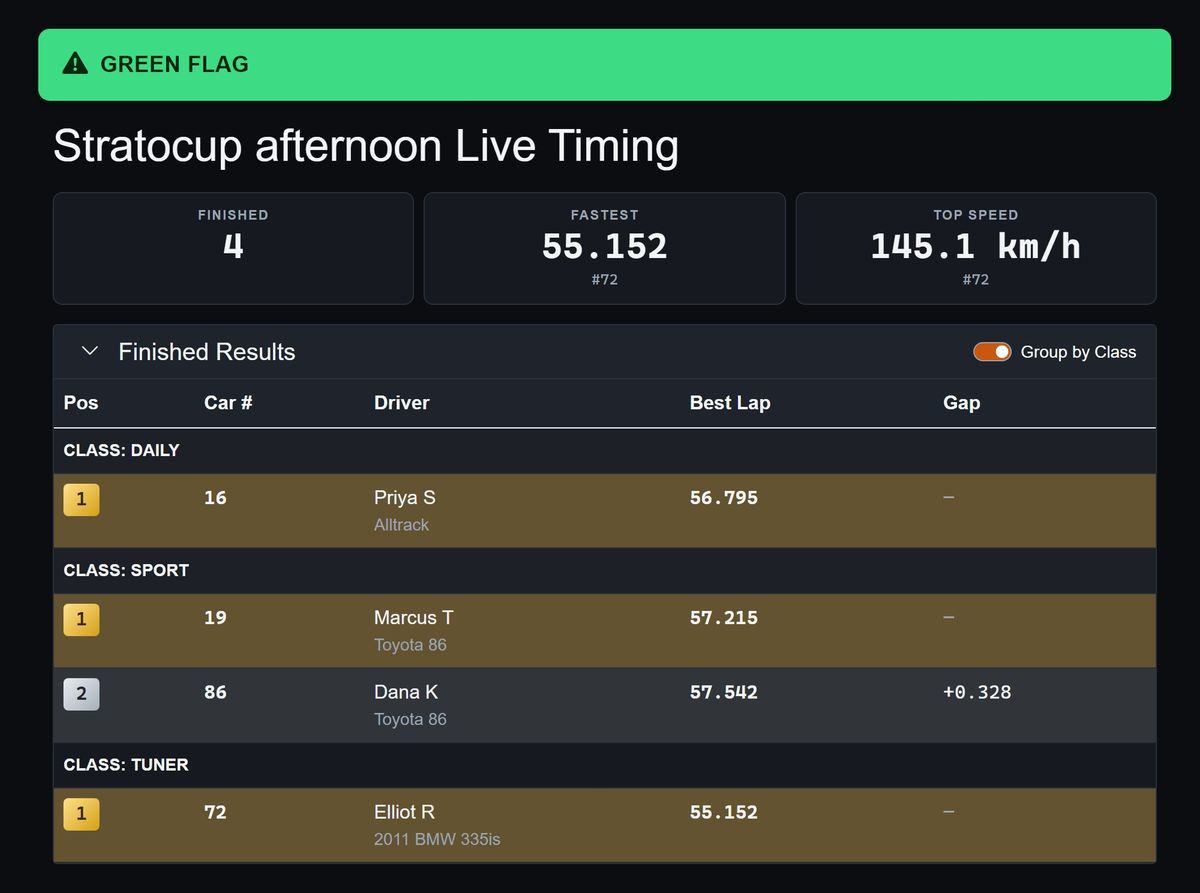
Times reach drivers and spectators instantly. Autocross scores each driver's best run; circuit lapping runs rolling boards with pit lane filtering.
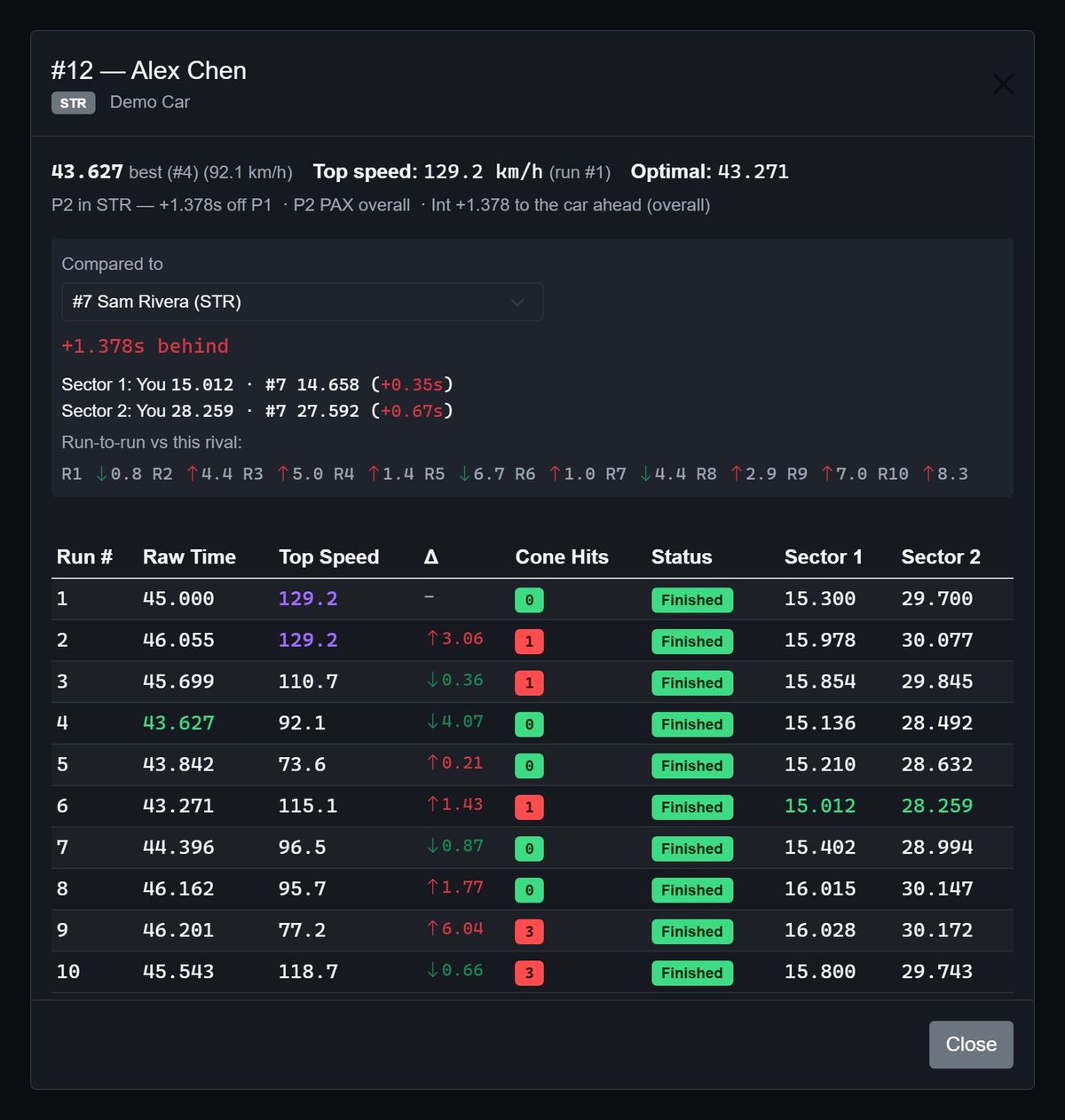
Public live timing
Open on any phone. PAX, classing, splits, optimal lap, top speed and CSV export.
Deep comparisons
Click any row to compare competitors lap by lap and sector by sector.
Automated season points
Points, drop weeks and tiebreakers calculate automatically according to your series rulebook.
An official transponder and driver data logger in one device.
Traditional transponders aren't a centimetre-level data logger, and a phone's built-in GPS updates at 1 Hz with limited accuracy. The Sidereal device scores the race and streams 10 Hz telemetry straight to the driver, so every driver has data to improve with.
Streams into your driving app
The device streams centimetre-level positioning over Bluetooth into RaceChrono, TrackAddict, and Harry's LapTimer. Competitors get driving lines and apex speeds on their own phones, without buying a standalone logger. Most are about 100 times less accurate.
A transponder rental that gives drivers data
Instead of paying for a passive transponder rental with no feedback, drivers get live high-rate data. Organizers can pass along the registration fee without the pushback.
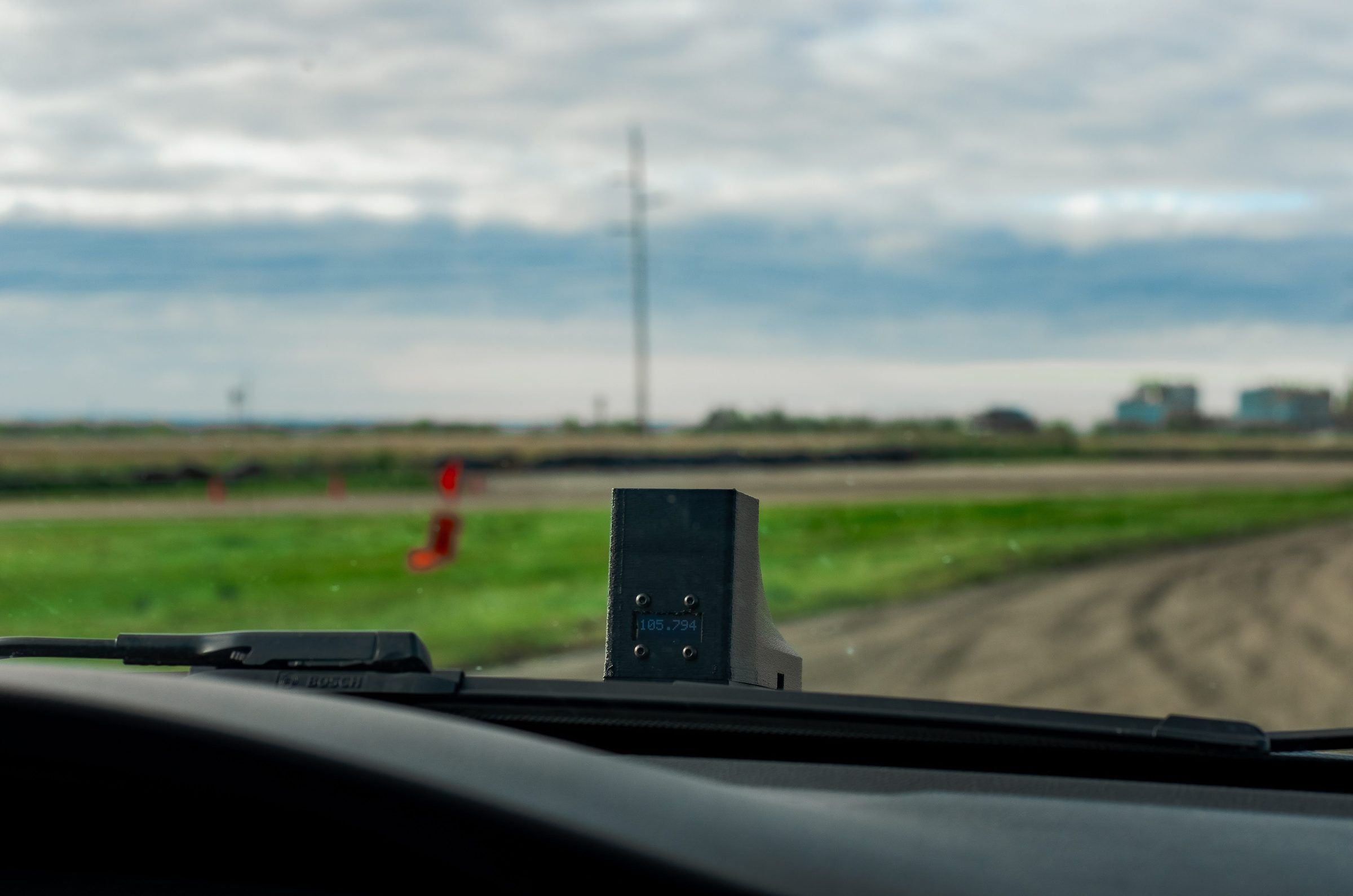
Anywhere you can see the sky.
Originally built for motorsport, and works wherever you have open sky: tarmac, gravel, ice, water, or dirt.
Reserve your season or schedule a shadow trial.
DMS is our anchor partner for 2027 with limited openings for other series remaining. Request a free on-track shadow timing trial for summer 2027 or reserve fleet capacity for 2028.